 Lithium CEO warns of perils facing US critical minerals push
https://www.mining.com/web/lithium-ceo-warns-of-perils-facing-us-critical-minerals-push/
The experience at Thacker Pass offers an early warning signal for the dozens of mining projects the Trump administration is trying to coax into existence.
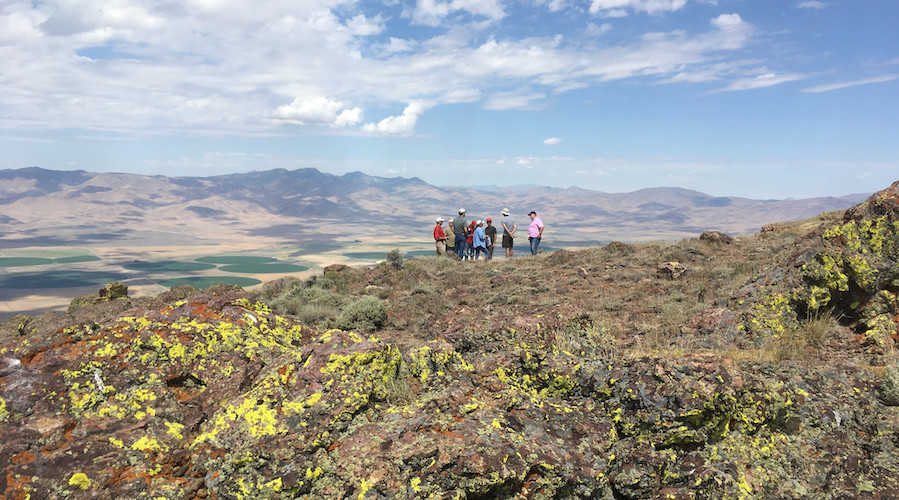
Thacker Pass was projected to begin lithium production in the second half of 2026. Credit: Lithium Americas
Lithium Americas Corp.’s flagship US mine has become an expensive test of the Trump administration’s push to rebuild a domestic critical minerals industry, with labor shortages, rising wages and tariffs pushing its construction bill almost $900 million higher.
The economic pressures that hiked the cost of the company’s Thacker Pass mine — a giant lithium project in Nevada backed by the US government — are soon going to confront other mining companies trying to build similar projects in the US, warned Chief Executive Officer Jon Evans in an interview Tuesday.
“For the companies behind us right now, it’s going to be tough — very tough,” said Evans. “We’re just a barometer for what happens if you want to build power lines, or new power plants, or even a hospital. It requires a lot of specialized skill sets, and these are areas we need to focus on or else it’s going to bite us in the butt.”
Shares of Lithium Americas plummeted to a record low when the miner raised the price tag for the lithium project by about 31%, or $900 million. The firm is supposed to complete the project next year and begin production in 2028.
Lithium Americas shares rose 4.3% Wednesday morning in New York.
The experience at Thacker Pass offers an early warning signal for the dozens of mining projects the Trump administration is trying to coax into existence as it seeks to reduce US dependence on China for everything from lithium and rare earths to graphite and copper. The government has extended funding to domestic miners, including by taking equity stakes in firms like MP Materials Corp. and Trilogy Metals Inc. in a bid to speed up their projects.
Evans attributed the project overrun to an array of economic headwinds including higher worker wages, a dearth of skilled laborers, tariffs that have made foreign imports of mining equipment more expensive, and even federal immigration policies that prevent workers abroad from coming into the US.
“We’re in a situation where you already have a stressed shortage of craft labor in the US, now compounded by the fact that, for folks who want to come work in the US, that route isn’t readily available to them,” said Evans.
Several multibillion-dollar mines are being advanced in the US. South32 Ltd. is building a roughly $2 billion project in Arizona, while Rio Tinto Plc and BHP Group are advancing the giant Resolution Copper project in Arizona, which could eventually supply as much as a quarter of US copper demand. In Alaska, Trilogy Metals Inc. and South32 are advancing a copper project in the Ambler mining district, where the US government has taken a roughly 10% stake in Trilogy and pledged to help facilitate financing for a proposed access road.
Lithium Americas, which received a $2.3 billion loan to build Thacker Pass under former President Joe Biden, has attributed some of its cost overruns to the Trump administration’s own policies. The company said last week that tariffs and logistics amounted to about $100 million in additional costs at the project, due to higher fuel prices, challenging shipping conditions and purchases of specialized equipment from foreign countries.
Mines routinely take years to secure permits and billions of dollars to construct, while the prices of the commodities they eventually produce can swing dramatically before they enter production. Lithium prices, for example, remain far below the record highs reached during the electric-vehicle boom earlier this decade.
The mine is considered strategically important because US lithium production remains tiny compared with China and other major producers. Once the first phase reaches full production, Thacker Pass is expected to produce about 40,000 metric tons of battery-grade lithium carbonate annually, dramatically expanding domestic supply.
Lithium Americas now expects the first phase to cost $3.83 billion, compared with its previous $2.93 billion estimate. The company has enough funding to cover the cost overrun between its cash on hand and the reserve accounts funded under its loan from the Department of Energy, Evans said.
Under revised loan terms, the government could require Lithium Americas to inject as much as another $127 million into the project if a future construction-budget review identifies a funding shortfall.
Evans doesn’t expect the company to report another cost increase before the project is completed.
“We’re fully funded,” he said. “I can’t fake it until I make it in terms of having enough money. You have to have everything up front before you get started, and there are extra reserves in place which were put in place exactly for stuff like this.”
The company is also in discussions with 10 prospective buyers of its metal, once Thacker Pass is completed, Evans said on Tuesday. He said the firms plans to announce some of those deals next year.
“We have about 10 discussions underway right now,” he said. “People are very interested because we’re the only project that’s near-term.”
(By Jacob Lorinc)
Related Posts
Tags
Share This